

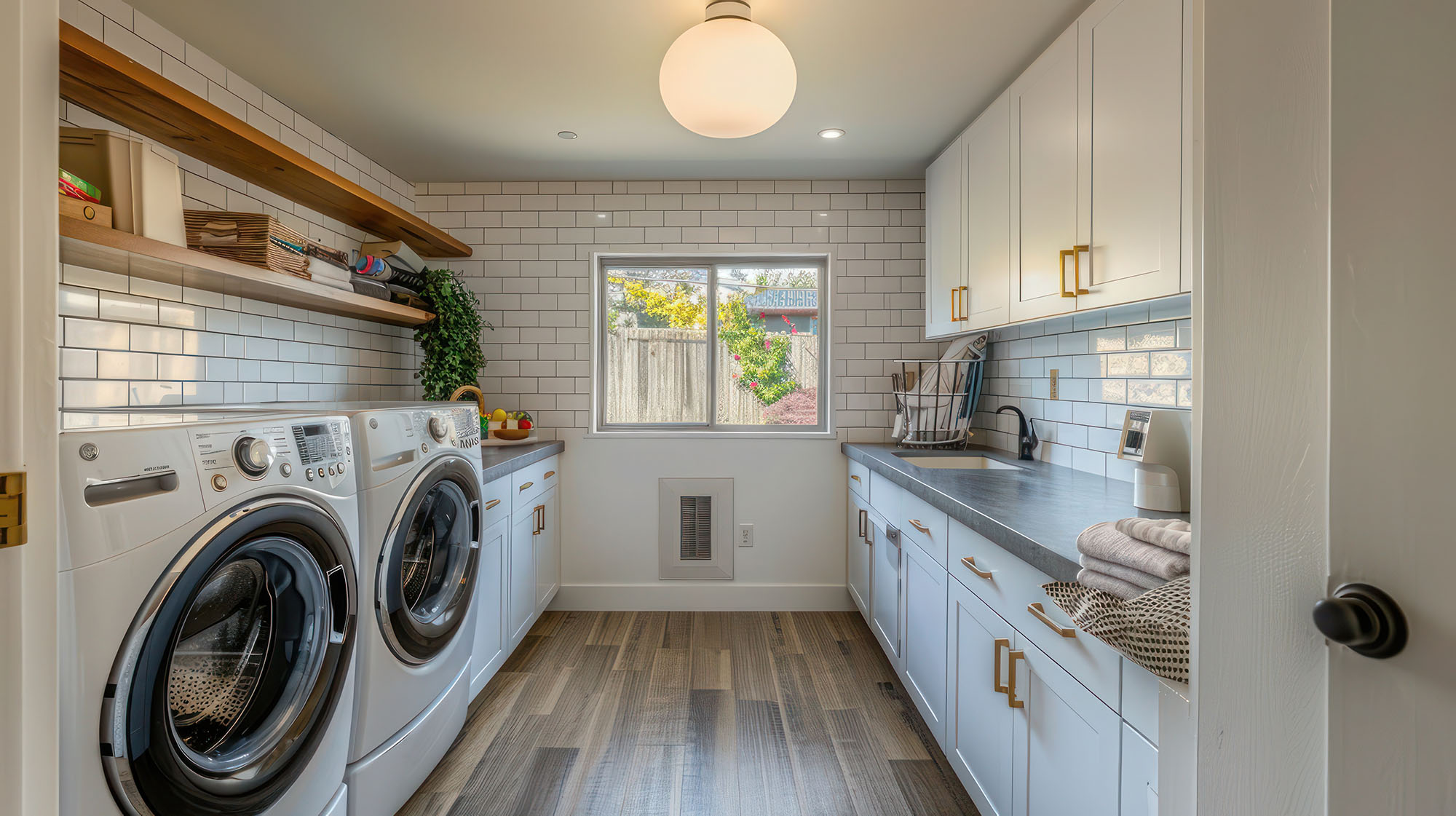
Old Town Alexandria row houses and historic Del Ray cottages sit on centuries-old stone, brick, and timber foundations that absorb moisture from the tidal Potomac River. Alexandria summers bring thick, humid air that drives vapor into crawl spaces and basements, while cold winters dry out the air indoors. Solid antique pine and oak floors react aggressively to these moisture swings, cupping in August and gapping in January. Waterproof laminate flooring provides a resilient defense against this damp coastal plain environment while protecting the architectural character of your historic residence.
Alexandria Architecture and Potomac Moisture Challenges
Groundwater levels along the Potomac waterfront stay high throughout every season. Early American builders constructed homes with fieldstone footings, soft lime mortar, and unvented crawl spaces. These building methods allowed moisture to migrate freely through porous masonry. When you live in neighborhoods like Old Town, Rosemont, or Parker-Gray, ambient dampness constantly enters ground levels and subfloors.
Accidental spills, winter slush from cobblestone sidewalks, and pet accidents create immediate moisture hazards inside your living spaces. Traditional hardwood boards absorb surface liquid quickly, which causes dark water rings and permanent plank distortion. Refinishing historic wood floors strips away precious structural wood that you cannot replace. Modern waterproof laminate delivers the appearance of period-accurate lumber while stopping surface liquids and subfloor vapor from ruining your finished floors.
Waterproof Laminate Construction and Historic Preservation
Waterproof laminate engineering combines dense mineral or wood-fiber composite cores with sealed, water-repellent locking joints. Manufacturers treat core materials with hydrophobic resins that prevent water swelling even during plumbing leaks or standing water events.
Hydrophobic Cores and Tight Locking Joints
Tight mechanical locking mechanisms press plank edges together with extreme pressure. This tight bond creates an impenetrable barrier that keeps surface spills from trickling down between boards. You get hours of defense against liquid penetration, giving you time to wipe up spills without panic. Beneath the surface, an integrated wear layer shield protects against claw gouges, street grit, and furniture drags.
Historic Aesthetic Profiles and Wide Plank Textures
Historic Alexandria architecture calls for specific lumber proportions. Federal townhomes, Greek Revival residences, and Craftsman bungalows feature wide-plank heart pine, character white oak, or rich walnut. High-definition digital imaging replicates genuine wood grain patterns, saw marks, and wire-brushed textures. Embossed-in-register printing matches the surface texture directly to the visual wood grain below it. Low-luster matte sheens replicate traditional wax and oil finishes, so your new floor looks completely natural next to original millwork, plaster moldings, and historic brick fireplaces.
Subfloor Preparation Across Aging Foundations
Settlement across centuries leaves Alexandria subfloors uneven and out of level. Structural floor joists sag toward the center of rooms, while hand-hewn support timbers twist over time. Modern rigid floors need a uniform base to keep locking mechanisms intact.
Subfloor Leveling and Vapor Barriers
Preparation begins with a detailed subfloor inspection. Professional crews measure subfloor deviation using precision straightedges. High spots get sanded flat, while low dips receive targeted self-leveling underlayment compounds. If your home rests on a concrete slab or over an unconditioned crawl space, crews lay a 6-mil polyethylene vapor barrier directly over the subfloor. This barrier stops rising subterranean moisture from attacking the underside of your new flooring. Acoustic underlayment pads mute hollow footstep sounds and deliver quiet comfort underfoot.
Floating Floor Protection for Original Timbers
Floating floor installation avoids nails, staples, and permanent chemical adhesives. Planks connect directly to each other, resting freely over an approved underlayment pad. This floating system allows underlying original floorboards to expand and contract naturally beneath the new surface. If future preservation guidelines or personal tastes change, you can lift the floating floor without damaging the historic structural timbers underneath.
Priority Rooms for Moisture Defense
High-risk rooms in historic Alexandria homes benefit the most from waterproof laminate:
English basements and garden levels: Below-grade living areas experience chronic dampness through stone walls and porous slab foundations. Waterproof laminate withstands rising humidity where solid hardwood would cup and buckle.
Kitchens and pantries: Heavy foot traffic, sink splashes, and dishwasher hose leaks cause severe damage to traditional hardwood. Waterproof planks repel standing water and clean up with a simple damp mop.
Mudrooms and entry foyers: Alexandria winters bring road salt, rain, and mud into your home. Waterproof laminate handles wet boots and umbrella drips without surface staining.
Attic conversions and third-floor suites: Historic rooflines experience radical summer heat and winter drafts. Waterproof laminate handles ambient atmospheric fluctuations without splitting or peeling.
The Kruper Flooring & Design Shop-at-Home Advantage
Kruper Flooring & Design brings the entire showroom experience straight to your front door. Evaluating flooring samples inside your own home matters because historic Alexandria homes possess distinct interior lighting. Antique multi-pane glass windows, gas-light-style wall sconces, and deep historic room proportions cast unique shadows across floor surfaces. A wood stain that looks warm under warehouse fluorescents can look entirely different beside your historic plaster walls and custom trim.
Kruper Flooring & Design guides your project using a proven four-step process:
Flooring Design Consultation: A dedicated specialist brings curated samples directly to your residence, inspects your subfloors, and evaluates your home architecture.
Pricing and Scheduling: You receive a clear, straightforward estimate with no hidden costs, followed by flexible project scheduling.
Expert Installation: Certified installers handle delicate subfloor prep, expansion gaps, and precision transitions along antique baseboards.
Dedicated Follow-Up: Our team inspects the completed installation to confirm your 100% satisfaction.
Whether you live near the historic waterfront in Old Town or in an established neighborhood near the Lorton or Stafford service hubs, our mobile team brings expert flooring advice directly to you.
Common Questions About Historic Alexandria Flooring
Can waterproof laminate handle Potomac River humidity swings?
Yes. Waterproof laminate features high-density composite cores engineered to resist dimensional shifting. Solid wood planks swell across their width when relative humidity climbs past 60 percent, but waterproof laminate maintains dimensional stability through humid Virginia summers and dry winters.
Will waterproof laminate harm historic subfloors?
No. Floating floor methods protect your historic subfloors because technicians do not drive hundreds of cleats or spread sticky adhesives across antique boards. A vapor-permeable or protective underlayment rests between the historic wood and the laminate, preserving original materials beneath.
What plank styles match 18th- and 19th-century architecture?
Wide-plank designs with matte finishes and warm, natural undertones match colonial and Victorian architecture. Look for planks that measure between six and eight inches wide with subtle bevels and authentic saw marks that mirror early Virginian heart pine and hand-scraped white oak.
Schedule your in-home flooring design consultation with Kruper Flooring & Design to see waterproof laminate samples in your home lighting today.


