

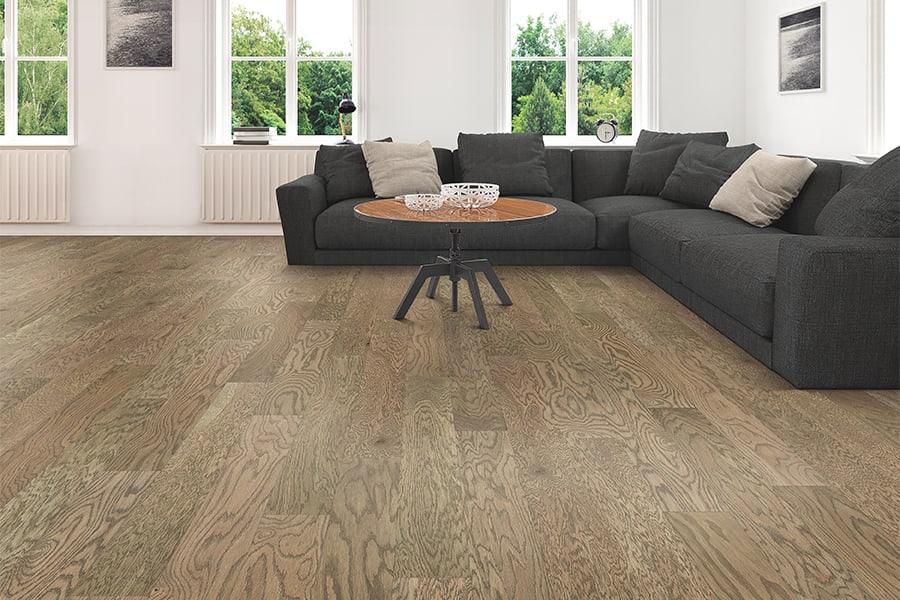
Choosing between engineered hardwood and solid hardwood is one of the most important flooring decisions Northern Virginia homeowners face. Both materials offer beauty, durability, and long-term value — but they perform differently based on climate, room usage, and home structure.
Whether you're renovating a home in Fairfax, upgrading an Alexandria townhouse, refreshing a Reston condo, finishing a basement in Ashburn, or modernizing a property in Culpeper, this guide explains everything you need to know before choosing your flooring.
Kruper Flooring helps homeowners make an informed decision by providing professional recommendations and on-site evaluations across Fairfax, Alexandria, Reston, Herndon, Sterling, Vienna, Burke, Falls Church, Manassas, Chantilly, Ashburn, Springfield, Great Falls, Oakton, and Culpeper.
What Is Solid Hardwood?
Solid hardwood flooring is constructed from a single piece of natural wood. It’s the classic flooring material preferred for its beauty, longevity, and ability to be refinished many times over its lifespan.
Benefits of Solid Hardwood
Can be refinished 4–7+ times
Very long lifespan (50–100 years)
Authentic wood grain and natural appearance
Excellent resale value
Ideal for main floors and low-moisture areas
Best Rooms for Solid Hardwood
living rooms
dining rooms
hallways
bedrooms
main-level areas
Solid hardwood is the gold standard for long-term home value, especially in Northern Virginia neighborhoods with older, character-filled homes.
What Is Engineered Hardwood?
Engineered hardwood consists of a real hardwood surface layer bonded over a core of plywood or high-density fiber layers. It looks identical to solid hardwood but offers more stability in moisture or temperature changes.
Benefits of Engineered Hardwood
More resistant to humidity
Suitable for basements and lower levels
Compatible with concrete subfloors
Often available in wider plank styles
Less prone to warping or cupping
Best Rooms for Engineered Hardwood
basements
condos or townhomes
kitchens
lower-level family rooms
homes with humidity fluctuations
Northern Virginia's seasonal climate makes engineered hardwood an excellent choice for homes needing stability across temperature shifts.
Side-by-Side Comparison: Solid vs. Engineered Hardwood
Feature | Solid Hardwood | Engineered Hardwood |
Material | Single piece of wood | Real wood top layer + plywood core |
Refinishability | 4–7 times | 1–3 times (depending on thickness) |
Moisture Resistance | Low | High |
Installation Options | Nail-down only | Nail, glue, or floating |
Basement Friendly | No | Yes |
Climate Stability | Expands/contracts | Very stable |
Cost | Higher | Moderate |
Style Options | Traditional | Wide range, including wide planks |
Both types can be excellent choices — it depends on the specific home and room conditions.
How Northern Virginia’s Climate Affects Hardwood Choice
Northern Virginia experiences:
humidity in summer
dry air in winter
temperature swings throughout the year
These factors cause wood to naturally expand and contract.
Solid Hardwood
Expands and contracts more dramatically
Needs careful acclimation
Best for upper floors
Engineered Hardwood
Multi-layer core resists movement
Ideal for basements, condos, and high-humidity spaces
Provides superior long-term stability
Kruper Flooring evaluates humidity levels, subfloors, and room conditions to recommend the best option for each home.
Installation Differences
Solid Hardwood Installation
Nail-down over wood subfloors
Requires professional acclimation
Best for existing hardwood homes
Not recommended for concrete slabs
Engineered Hardwood Installation
Nail-down, glue-down, or floating
Works with more subfloor types
Faster installation
Excellent for multi-level homes and basements
For homes in Alexandria, Reston, Ashburn, and Fairfax with mixed subfloors, engineered hardwood often solves multiple challenges.
Cost Comparison
Solid Hardwood
Costs more due to:
thicker construction
multiple refinishing capabilities
premium long-term value
Engineered Hardwood
Typically more affordable because:
uses less solid wood
installation is often simpler
wider range of product tiers
Kruper Flooring provides transparent quotes for both materials.
Long-Term Durability
Both options are durable, but lifespan differs slightly.
Solid Hardwood: 50–100 years with proper maintenance
Engineered Hardwood: 20–40 years depending on brand and wear layer
For homeowners planning to stay long-term, solid hardwood may be preferable. For moisture-prone homes or basements, engineered hardwood is the clear winner.
Resale Value in Northern Virginia
Both options increase home value — but buyers appreciate hardwood regardless of type.
However:
Solid hardwood typically yields the highest appraised value
Engineered hardwood still ranks above laminate or vinyl
Both are excellent for resale in competitive markets like Fairfax, Alexandria, Ashburn, and Great Falls.
Which Should Northern Virginia Homeowners Choose?
Choose Solid Hardwood If:
✔ You want maximum long-term value
✔ You plan to refinish multiple times
✔ Your home has a stable, wood subfloor
✔ You prefer traditional hardwood aesthetics
Choose Engineered Hardwood If:
✔ You need moisture resistance
✔ You’re flooring a basement
✔ You have a concrete slab
✔ You want wide, modern plank styles
✔ You live in a home with humidity fluctuations
Most Northern Virginia homeowners choose a hybrid approach — solid hardwood on the main floor and engineered hardwood in basements or upper-level condos.
Why Kruper Flooring Recommends Both Options
Kruper Flooring has years of experience installing both solid and engineered hardwood in homes across Fairfax, Alexandria, Reston, Herndon, Sterling, Vienna, Burke, Falls Church, Manassas, Chantilly, Ashburn, Springfield, Great Falls, Oakton, and Culpeper.
Our team helps homeowners decide based on:
room type
subfloor structure
long-term goals
expected moisture levels
design preference
budget and maintenance expectations
Both materials can deliver stunning results when installed correctly.
Conclusion
When comparing engineered hardwood vs. solid hardwood, the best choice depends on where the flooring will be installed and how you plan to use your home. Northern Virginia’s climate, home structure, and design style all play a role in selecting the right product.
Whether you prefer the classic longevity of solid hardwood or the versatility of engineered hardwood, Kruper Flooring provides expert guidance and professional installation across all Northern Virginia communities — including Culpeper.
Get help choosing your hardwood flooring
FAQ
Is engineered hardwood as good as solid hardwood?
Yes — engineered hardwood offers excellent durability and greater moisture resistance, but solid hardwood lasts longer and can be refinished more times.
Can engineered hardwood be installed in basements?
Yes, engineered hardwood is ideal for basements due to its humidity stability.
Does solid hardwood add more resale value?
Solid hardwood is often viewed as the highest-value flooring, but both add appeal to Northern Virginia homes.
Can engineered hardwood be refinished?
Yes, depending on the wear layer thickness. Many engineered floors can be refinished 1–3 times.


